
When AI begins to read human emotions, the redefinition of model IQ and EQ is reshaping the future of human-computer interaction.
In November 2025, OpenAI officially launched the GPT-5.1 series. While arriving just three months after its predecessor GPT-5, this update signifies a critical turning point for the AI industry. This shift from a focus on technical specifications to user experience optimization reflects a deeper evolution – it's not just about the technology itself, but about how AI can better integrate into human life and work.

The Core Breakthrough: An EQ Upgrade
The GPT-5.1 series comprises two core models: GPT-5.1 Instant and GPT-5.1 Thinking. The former serves as the default for daily interaction, introducing an "adaptive reasoning" mechanism. This allows the model to autonomously gauge a query's complexity, striking an intelligent balance between instant responses for simple questions and deeper contemplation for complex tasks.
More notably, GPT-5.1 represents a major leap in personalization. OpenAI introduced a matrix of eight distinct conversational styles. Building upon the classic mode, new options like "Professional," "Blunt," and "Whimsical" are available. Users can even fine-tune responses by adjusting parameters for brevity, tonal warmth, readability, and even emoji frequency.
This pivot underscores OpenAI's keen insight into user needs. As Fidji Simo, CEO of OpenAI Applied, stated, "With ChatGPT's user base exceeding 800 million, the era of a one-size-fits-all approach is over." AI is evolving from a generic tool into a personalized partner.

Industry Pivot: From Specs to Experience
The release of GPT-5.1 signals that the industry's competitive focus is shifting. It's moving away from a pure competition over parameter scale and computational might towards a new phase centered on "holistic experience and systems engineering."
This shift is not accidental. Following GPT-5's release, user feedback often indicated that performance gains felt "imperceptible," with some even noting regressions in certain mathematical reasoning tasks compared to GPT-4o. This prompted OpenAI to undertake what the industry dubbed a "firefighting update," focusing intensely on "instruction following and adaptive thinking" – essentially attempting to win back users with enhanced "emotional intelligence."
This realignment resonates deeply with the "human-centric AI design philosophy" long championed by LBAI. We believe AI's true value lies not in abstract scores on standardized benchmarks, but in its practical problem-solving capability and the quality of connection it establishes with users.

Dual-Model Architecture: The Art of Balancing Intelligence and Efficiency
GPT-5.1's dual-model architecture warrants closer examination. GPT-5.1 Instant, the default, maintains rapid response times but now exhibits a more affable and conversational tone, with significantly improved instruction-following accuracy. GPT-5.1 Thinking, specializing in professional reasoning, intelligently modulates its thinking pace – responding to simple tasks twice as fast as its predecessor, while dedicating more time to produce thorough answers for complex problems.
This architecture not only breaks new ground in user experience but also demonstrates intelligent computational resource allocation. The GPT-5.1 Auto feature automatically routes each query to the most suitable model, achieving the dual objectives of enhanced answer quality and optimized computational efficiency. For enterprise users, this translates to lower inference costs and more consistent service quality.
Affective Computing: The Next Frontier in AI Competition
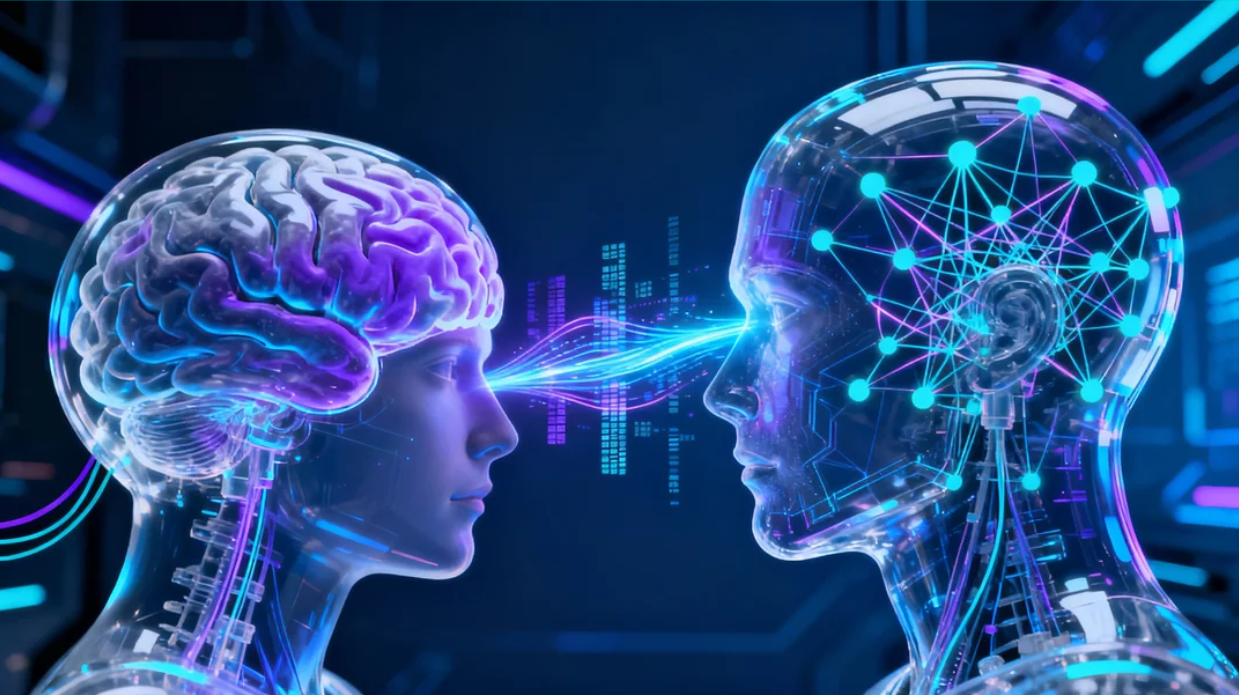
GPT-5.1's upgrades highlight the growing importance of affective computing. This enables AI not just to "hear" words, but to "see" expressions and "detect" emotional nuances in tone. The "warmth" in this human-computer interaction hinges on achieving emotional resonance, cultural adaptation, and value alignment.
Industry experts widely agree that the future of AI competition will be less about "who calculates faster" and more about "who understands people better." This trend is particularly evident in fields like mental health, education, and customer service. Studies indicate that 72% of clinicians using generative AI to draft patient messages report reduced cognitive load, while 92% of nurses believe the technology improves their efficiency, empathy, and communication quality.
However, affective computing introduces new challenges. As AI provides high-quality emotional value, it risks creating new "conversational cocoons," where users might become deeply immersed, potentially distancing themselves from real-world interactions. Balancing emotional support with preventing over-reliance is a critical issue the industry must collectively address.

LBAI's Strategic Outlook
In light of the changes heralded by GPT-5.1, LBAI identifies several key strategic priorities:
Deep Personalization in Vertical Sectors: The personalization of general-purpose LLMs unlocks new opportunities in vertical applications. LBAI will continue deepening its work in specialized fields like finance, healthcare, and education, developing models with domain-specific EQ. Unlike general models, our focus extends beyond tonal warmth to a profound understanding and adaptation to professional contexts.
Controlled Generation and Transparent Reasoning: GPT-5.1's "thinking trace" visualization is a significant step towards Explainable AI (XAI). LBAI is developing more advanced reasoning process monitoring technologies, allowing users to not just see the answer but understand the model's reasoning path. This is crucial for high-stakes decision-making scenarios.
New Paradigms for Human-AI Collaboration: We firmly believe AI's future lies in augmenting human capabilities, not replacing them. LBAI is exploring novel human-AI collaborative interfaces, positioning AI as a natural extension of human ability. As GPT-5.1 demonstrates, when AI understands user style preferences and proactively adapts its behavior, this partnership becomes more seamless and integrated.
Balancing Safety and Ethics: As AI's emotional expressiveness grows, so do ethical and safety challenges. LBAI has established a multi-layered safety framework to ensure AI's emotional expressions are both rich and responsible. We adhere to a "Safety by Design" principle, integrating safety assessments from the earliest stages of all product development cycles.
Conclusion
The release of GPT-5.1 is a significant milestone, marking the industry's pivot from a parameter-centric race to a new chapter focused on user experience. This transition reflects not only technical progress but also AI's gradual integration into the fabric of daily life, becoming an indispensable partner in both work and emotional well-being.
At LBAI, we believe the AI of the future will be diverse, specialized, and deeply human-centric. Different scenarios call for AIs with different traits – sometimes we need an efficient, professional assistant; other times, a partner capable of empathy. The true breakthrough lies not in making AI more human-like, but in making it better at serving humanity.
GPT-5.1 has opened a new chapter in AI development, but this "EQ Revolution" is just beginning. As technology continues to advance, we anticipate the emergence of even more diverse and profound AI systems, collectively elevating human-AI collaboration to unprecedented heights.